


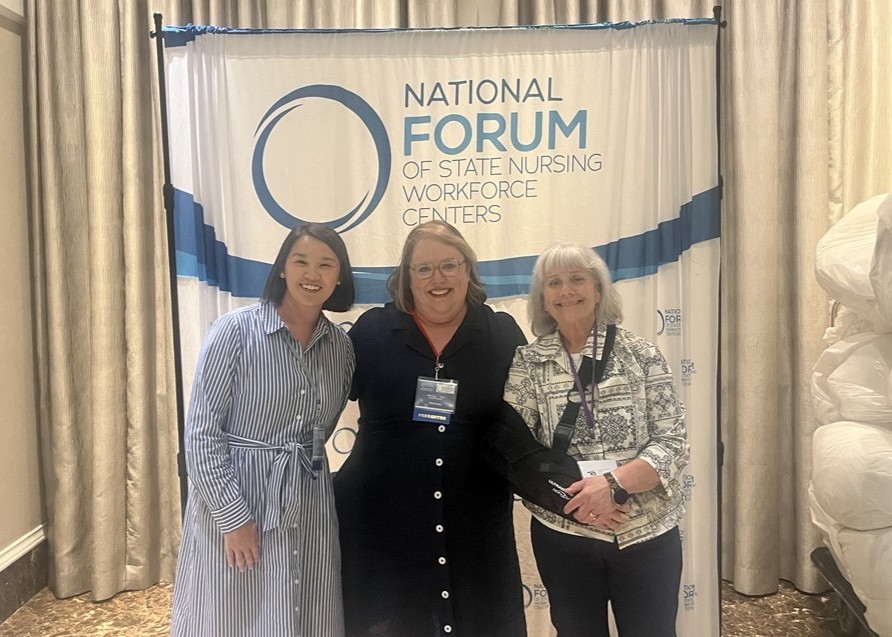
The NESA Consortium—a collaborative network of Oklahoma health professionals, programs, and hospitals— recently shared their journey of clinical placement transformation at the National Forum’s 2025 Annual Conference. Led by Patrice Greenawalt, MS, RS, Whitney Cole, MS, RS, and Tonie Metheny, MS, RS, CNE, their presentation highlighted the critical role that implementing a placement software solution has played in their recent successes.
For decades, nursing schools and healthcare employers across Oklahoma have faced a common, frustrating problem: a chaotic and outdated clinical placement process that creates bottlenecks for students and leaves institutions operating in the dark. So in 2023, a group of leaders from academic and clinical institutions across Central and Western Oklahoma said: enough.
When NESA was founded, they set out to transform how clinical placements were managed in Oklahoma. What started as a small, volunteer-led effort quickly revealed the scale of the challenge: the consortium included over 70 organizations, far more than the 24 initially assumed.
From there, through smart planning, relentless coordination, and collective commitment, the consortium has now implemented InPlace Network, a centralized clinical placement platform purpose-built to streamline capacity planning, scheduling, and data collection.
“We had a huge data problem. I mean, we just had no idea how big we were.”
— Whitney Cole, Consortium Co-Chair, NESA Presentation
What followed was a masterclass in leading large-scale change. Guided by John Kotter’s change leadership framework, the group built a cross-organizational coalition, held biweekly working meetings, evaluated 11 vendors, and ultimately selected InPlace Network based on scalability, existing best practices, and client feedback.
Key project outcomes include:
- A shared platform to coordinate clinical placements across 70+ schools and hospitals
- Real-time capacity tracking and data visibility
- Defined workflows for slot negotiation
- Strategic alignment with statewide nursing workforce goal
“We hit every single timeline we said we would.”
— Tonie Metheny, Consortium Co-Chair, NESA Presentation
Thanks to their efforts, NESA is already seeing program wins. This past fall, they were able to increase enrollment at one of their campuses by 25%, based on data they now have available from InPlace.
The Bigger Picture: Oklahoma Center for Nursing
This transformation isn’t happening in isolation. The Oklahoma Center for Nursing (OCN)—established by the Oklahoma Hospital Association as a response to its top strategic priority: workforce development—serves as a central hub for data, partnerships, and strategy development across the state. Its inaugural summit in October 2024 brought together 85+ stakeholders from education, healthcare, and policy to define shared priorities.
The NESA-InPlace implementation aligns directly with OCN’s mission to create a well-prepared and responsive nursing workforce by advancing five priority areas:
- Education and Training
- Retention
- Career Pathways
- Policy and Funding
- Institutional and Professional Development
Why It Matters
Oklahoma’s health systems and nursing programs now have a model for statewide clinical placement transformation—one grounded in collaboration, visibility, and shared ownership. With InPlace Network as the digital foundation and the Oklahoma Center for Nursing setting strategic direction, the state is positioning itself as a leader in building the next-generation healthcare workforce.
“Our goal is to become the hub of all things nursing in our state.”
— Patrice Greenawalt, Executive Director, Oklahoma Center for Nursing
The work continues—as broader Oklahoma state engagement is accelerating, and long-term outcome measurement strategies remain in development. Looking ahead, many hospitals will begin tracking high school shadow students in 2026 as part of a sustained investment in local workforce development. In addition, InPlace Network has been adopted by the Tulsa Regional area for a 2026 launch, serving as a springboard for expanding InPlace use across Oklahoma. For now, Oklahoma’s bold bet on coordination over chaos is already paying off—and the next phase is poised to deepen that impact statewide.
Want to Learn More?
Read the full announcement:
NESA Consortium Selects InPlace Network
Or explore how InPlace helps health systems and universities modernize placement management.